

By Ryan Carter
Mid-Year 2026 Investor Sentiment Pulse Check: What Multifamily Investors Are Really Thinking About the Midwest
If you’ve been following this series, you already know the Midwest multifamily story runs deeper than steady rent growth (Part 1) or the growing wave of capital moving in for the long term (Part 2). Those fundamentals remain solid. But with the year halfway done, we wanted to go one layer deeper: what does current investor sentiment actually look like?
We put out a quick pulse survey to gauge sentiment on the ground and heard back from 31 investors, operators, and advisors.
The patterns that came back are worth paying attention to, particularly when you break them down by investor type and typical deal size. Different players are approaching the region with very different mindsets, and those differences offer some genuinely useful takeaways for how capital is being deployed in the second half of 2026.
Midwest Is Gaining Traction, But the Motivations Vary
Approximately 84% of respondents indicated they plan to increase their multifamily exposure in the Midwest over the next 12–18 months. Many of these are active private investors already putting money to work.
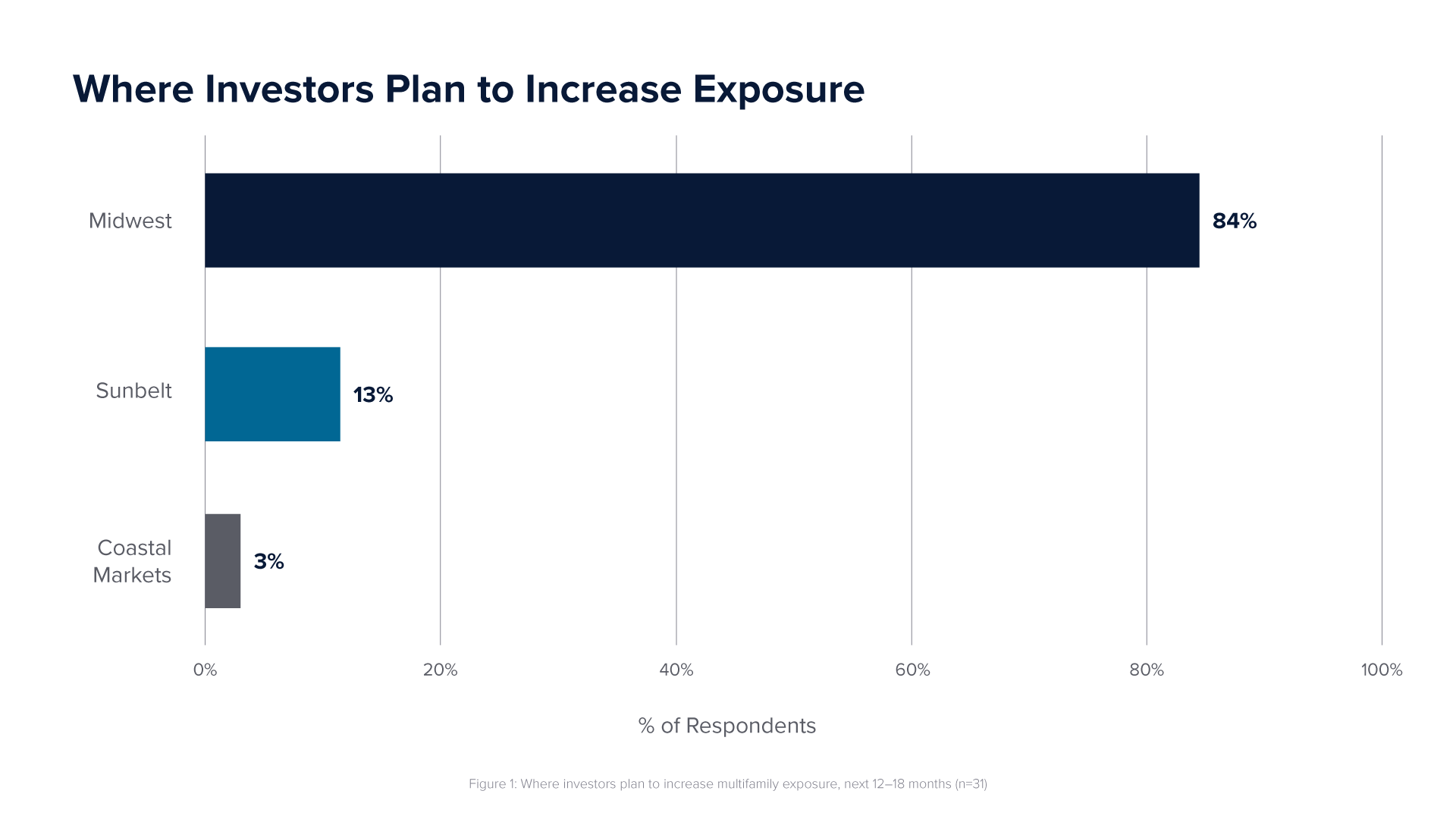
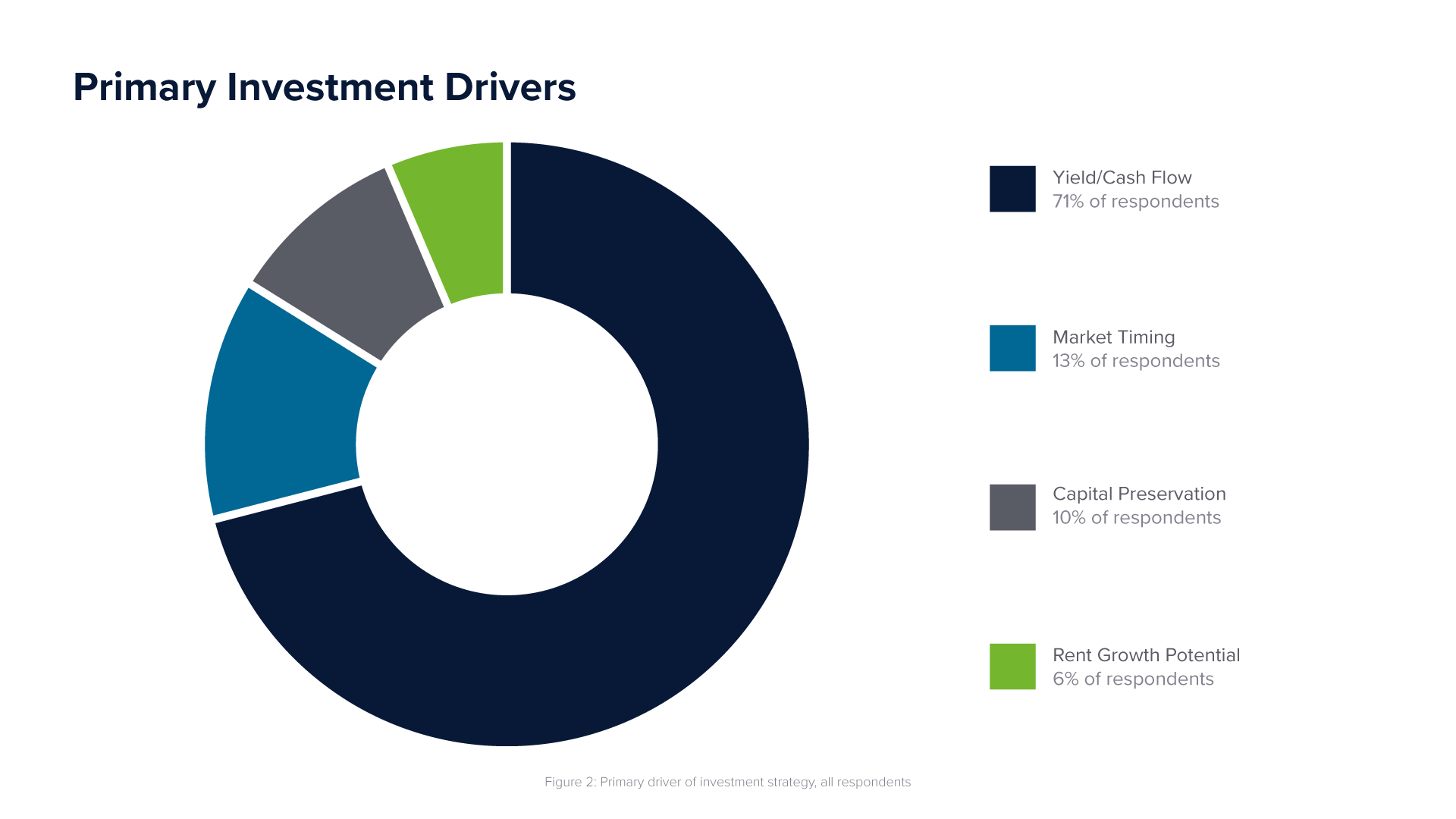
The responses split noticeably along geographic lines. A small group of Sunbelt-focused respondents mostly cited capital preservation as their primary driver, directionally consistent with the broader shift away from growth-at-all-costs Sunbelt underwriting, though the sample is too small to call it a trend on its own. In the Midwest, the dominant theme was yield and cash flow (~71% of respondents), with market timing, rent growth potential, and capital preservation also appearing.
Active Private Investors Show Strong Midwest Interest
Active private investors, those currently acquiring, not just tracking, stand out with a clear Midwest tilt in the responses:
- Reliable cash flow with room for rent growth remains the dominant motivation
- Value-Add Class B and Standard Class B lead (each ~29%), with Value-Add Class C close behind (~24%), and Class A trailing (~18%)
- $5–20 million deals are the most common size (~41%), followed by $20–50 million (~29%)
- Deals they can underwrite on a stabilized basis while still driving operational improvements
For example, one investor targeting a $5–20 million Midwest value-add deal highlighted rent growth potential as the key driver. Another focused on a Class A asset in the $20–50 million range listed yield as the priority while flagging rising interest rates as a top concern.
Key takeaway: These active private buyers see real opportunity in the Midwest. They’re focused on buying well, operating effectively, and generating strong cash-on-cash returns without relying on aggressive growth assumptions.
Different Segments, Different Postures
It’s worth separating two things that are easy to conflate: investor type and check size.
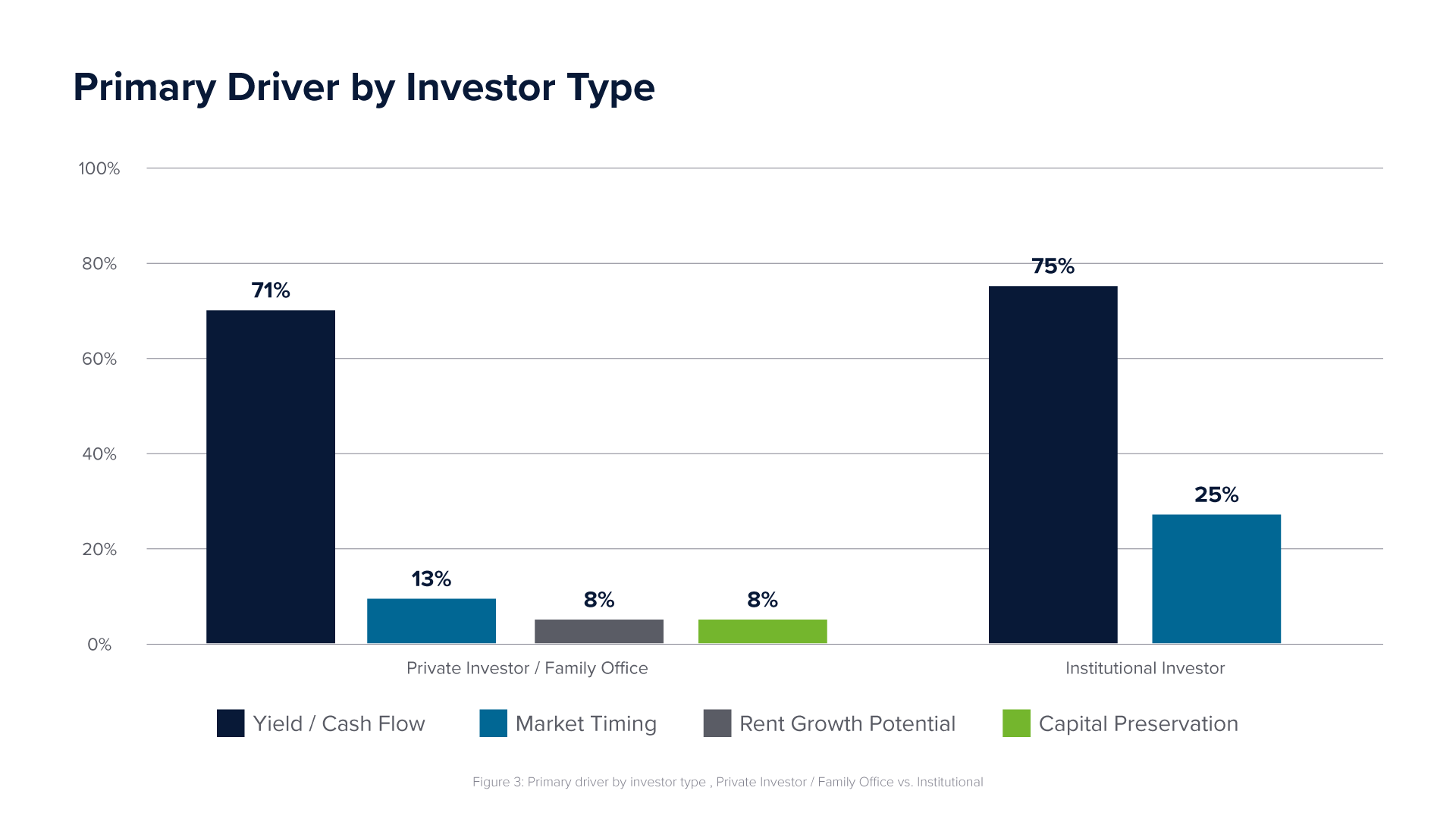
By investor type, the small institutional segment in our sample actually skewed yield-driven (75%) rather than preservation-minded, targeting Standard and Value-Add Class B assets, not the core Class A posture often assumed of institutional capital. That’s a small sample and shouldn’t be read as a market-wide signal, but it’s a notable data point.
By check size, the pattern was different: among the five respondents targeting deals over $50 million, two (both private investors) cited capital preservation and Class A as their focus, while the rest, including two of the institutional respondents above, remained yield-driven. In other words, in this survey, a more conservative posture tracked more closely with deal size than with investor type.
Mid-sized buyers ($5–20M range) were the most consistently yield-focused and Midwest-oriented segment overall, taking advantage of more accessible pricing.
Cost Pressures Are Real, But Manageable Here
Increased expenses topped operational risks (~55%), with taxes (~32%) and insurance (~23%) leading NOI pressure, followed by maintenance and payroll. No surprises in 2026.
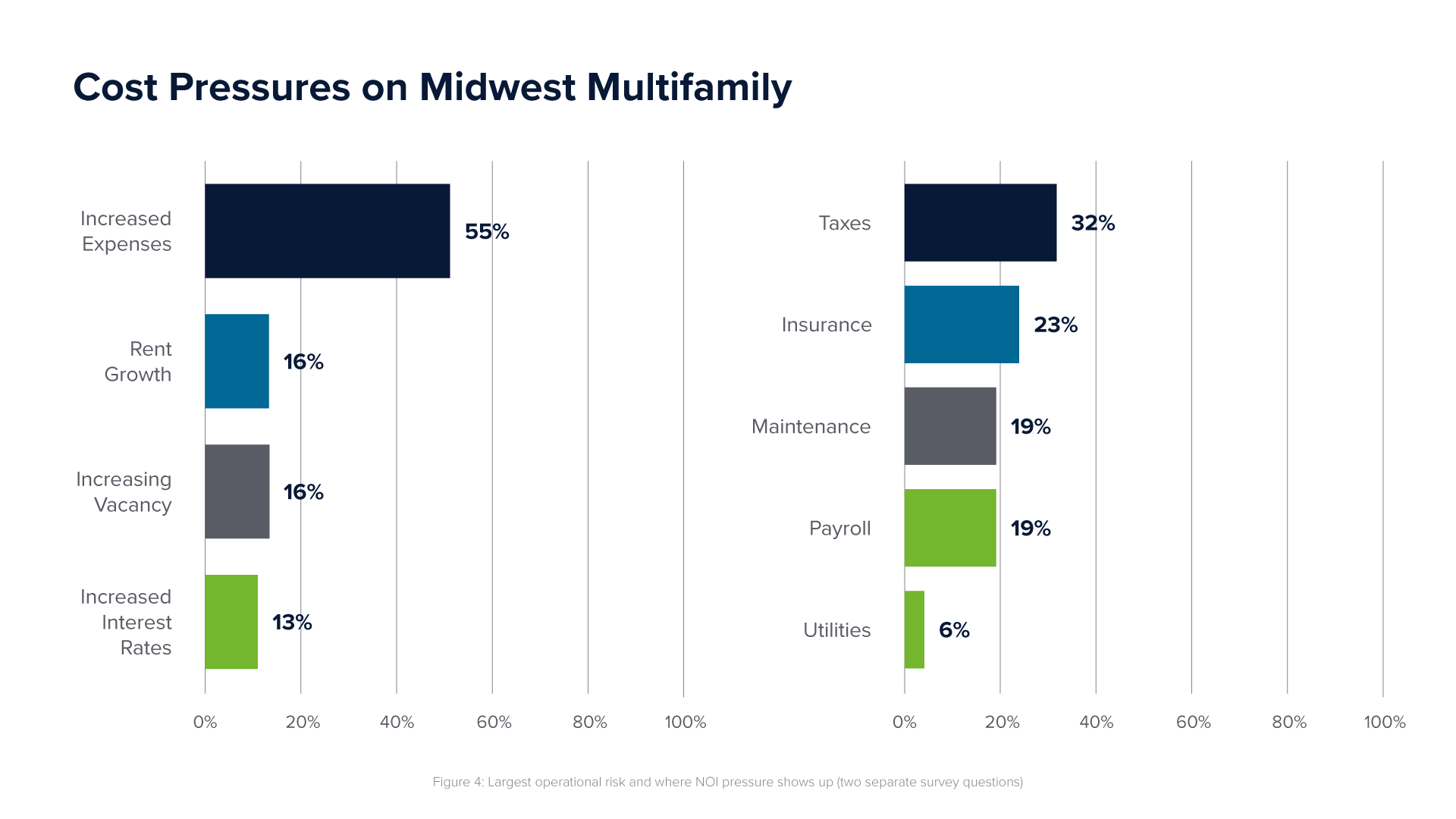
What stood out, though, was how many Midwest respondents still viewed their target assets as stabilized for underwriting purposes. They’re pricing those risks in and focusing on deals where the headwinds don’t destroy returns (Stabilized YOC is the most-focused metric at ~35%, followed by IRR ~26%).
This lines up with a broader shift we’re seeing in investor sentiment: after years of chasing high-growth Sunbelt stories, many are now looking for markets where the numbers still work in today’s higher-rate, higher-cost environment.
What This Means for Investors and Operators
If you’re already active in Midwest multifamily as a private investor or operator, these responses should feel like validation. The region plays to your strengths, hands-on management, local expertise, and the ability to create value through execution. Those who secured better basis earlier are well-positioned to deliver the kind of consistent income that institutional partners are increasingly demanding.
For larger allocators, the Midwest can serve two roles at once: a reliable core holding for income stability and a place to selectively pursue Value-Add alongside experienced local operators.
The bigger takeaway is this: private investors and family offices make up nearly 8 in 10 respondents in this survey, and roughly 70% of them cite yield as their primary driver. That combination, a large, active buyer base with a shared focus on cash flow, creates real staying power for the Midwest, even as larger checks show a more mixed posture.
Final Thoughts
The Midwest multifamily market in 2026 isn’t a single narrative. For some it’s a steady income generator. For others it’s an active value-creation opportunity. Both approaches are finding traction.
We’ll continue collecting responses and sharing what we learn. Early indications from this mid-year pulse check are clear: investors have moved past the talking stage. They’re putting capital to work, and the ones doing so most actively are focused on real income, operational edge, and long-term resilience.
If you’re seeing similar dynamics, or something different, we’d love to hear your perspective. Drop a comment or take the survey. And if you have assets or opportunities that match what these buyers are looking for, reach out. We’re actively helping connect the right capital with the right Midwest deals.
Curious what other investors are thinking? Take our short multifamily allocation survey here.
Methodology
Based on 31 unique responses collected via Greysteel’s Midwest multifamily investor pulse survey, May–July 2026. Subgroup figures for institutional investors and Sunbelt-only respondents reflect small samples and should be read directionally rather than as statistically representative findings.
Contact

Ryan Carter
Senior Director | Investment Sales
rcarter@greysteel.com
913.952.0372

BJ Connolly
Senior Managing Director | Investment Sales
bconnolly@greysteel.com
515.706.3109

Zach Schneider
Senior Director
zschneider@greysteel.com
515.706.3161

David Carrig
Sr. Advisor | Investment Sales
dcarrig@greysteel.com
402.267.2331

John Carrig
Advisor | Investment Sales
jcarrig@greysteel.com
402.402.2609

George Strawhecker
Associate | Debt Placement
gstrawhecker@greysteel.com
515.710.1645
Greysteel Advisory Expertise
Greysteel is a commercial real estate advisory firm specializing in investment sales and debt and structured finance, serving institutional clients, private investors, and middle-market operators nationwide.
The firm provides sector-focused advisory across all asset classes, delivering market intelligence, capital markets expertise, and disciplined execution.