

Healthcare Real Estate Series
Part 4 of 4
In our article series, we’ve explored the optimal timing for selling healthcare properties, the fundamentals of value creation, and today’s buyer motivations. Now, we bring all these elements together by focusing on a powerful strategy that allows medical professionals to unlock the full potential of their real estate assets without giving up their practice: the sale-leaseback.
For many medical practice owners who own their property, a sale-leaseback offers the best of both worlds: converting real estate assets into cash while retaining full operational control over the business. It is a sophisticated financial tool that, when executed properly, can provide the capital needed for growth, diversification, or retirement planning.
What Is a Sale-Leaseback?
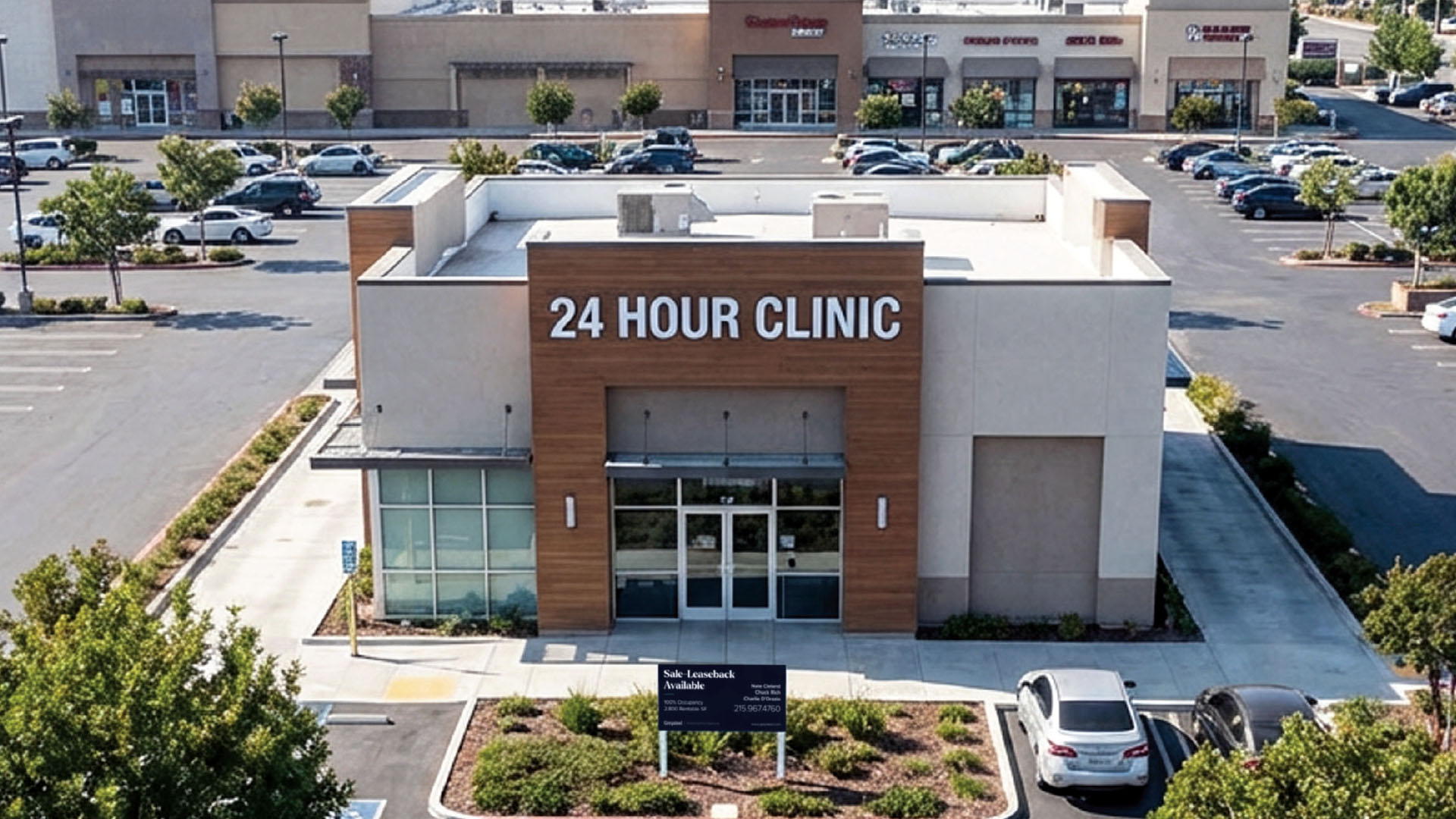
A sale-leaseback is a financial transaction in which a property owner (usually the practice operator) sells their real estate to an investor, while simultaneously signing a long-term lease to remain in the property as a tenant.
Simply put, you transfer passive ownership of your real estate in exchange for a significant infusion of capital, all while your clinic operations continue without interruption. The new owner becomes your landlord, whose main objective is to receive a predictable stream of rent from a stable and reliable tenant like you.
Why Sale-Leasebacks Work for the Medical Office Sector
The healthcare sector’s inherent stability makes it an ideal environment for sale-leaseback transactions. Investors are willing to pay a premium for properties with reliable tenants, and medical tenants are viewed as the gold standard because of the essential nature of their services and the low likelihood of relocation.
- Inherent tenant stability: Unlike retail or traditional office spaces, medical services are essential. Economic downturns do not reduce demand for dental checkups, eye care, or veterinary services. This recession-resistant characteristic provides investors with unmatched security.
- High switching costs: Medical practices are typically equipped with expensive specialized equipment and customized infrastructure. Relocating is not only costly but also disrupts patient care, which means medical tenants tend to remain long-term, ensuring steady rental income.
- Investor appeal: Sale-leasebacks in the medical sector are especially attractive to investors seeking passive income, since these leases are often structured as “NNN” (triple net) arrangements. This means the tenant is responsible for property taxes, insurance, and maintenance, creating a nearly hands-off investment for the landlord.

Benefits of Sale-Leasebacks for Medical Professionals
For property owners, the advantages of sale-leasebacks go far beyond simple financial gain—they can serve as a catalyst to help you achieve a range of strategic goals.
1. Unlock Capital for Growth or Retirement
This is the most immediate benefit. Selling your real estate frees up your equity from a single illiquid asset and injects significant cash into your business. These funds can be used for a variety of purposes:
- Business expansion: Open new locations, invest in advanced technology, or hire additional staff.
- Partner buyout: Provide capital for partners approaching retirement—without dipping into operating funds.
- Retirement planning: Diversify your investment portfolio and fund your retirement lifestyle.
2. Maximize Real Estate Value
Selling the real estate separately from your business typically delivers greater overall value. Healthy clinic income can support higher rents, which directly translate into greater property valuations. Attempting to sell real estate bundled with the business often restricts the pool of buyers and may undervalue the real estate component.
3. Maintain Operational Control
Unlike selling your practice outright, a sale-leaseback allows you to retain full control over your operations. You continue to serve your patients your way—while benefiting from the financial flexibility that comes with being a tenant.
Key Elements of a Successful Sale-Leaseback
The success of a sale-leaseback hinges on the terms of the lease agreement. A carefully structured lease can dramatically increase your property’s appeal to investors, maximizing your sale proceeds.
- Long-Term Lease: Investors seek stable, long-term income streams. A lease term of 10 years or more, often with several renewal options (for example, three 5-year renewals), is considered the gold standard. The longer the lease, the higher the value.
- Market-Aligned Rent: The rent should be consistent with the market rate for similar properties in your area. Another common benchmark is that rent should represent a reasonable percentage of the clinic’s gross revenue, typically between 4–6%. This demonstrates to investors that the rent is sustainable.
- Annual Rent Increases: To hedge against inflation and ensure growing returns, investors expect the lease to include annual rent escalations, usually in the range of 2–3%.
- Strong Lease Guarantee: The lease should be guaranteed by your clinic entity (corporate guarantee) or through a personal guarantee. For larger groups with multiple locations, a corporate-level guarantee can substantially increase the property’s attractiveness to investors.
Integrating Sale-Leasebacks into Your Overall Strategy
A sale-leaseback perfectly ties together the themes we’ve explored throughout this series. It requires you to strategically time your sale, taking action when interest rates are favorable and investor demand is strong. It pushes you to focus on value creation by optimizing your lease terms to enhance your property’s value. Finally, it directly appeals to specific types of buyers—institutions and private investors seeking stable, passive, long-term investments.
For many medical professionals, your real estate represents the work of a lifetime. Unlocking its value shouldn’t mean sacrificing the business you’ve built. A sale-leaseback offers a strategic path forward—allowing you to reap the financial rewards of your property while continuing to serve your community.
Determining whether a sale-leaseback is the right strategy for you requires careful analysis and expert guidance. A specialized team can help medical property owners design a sale-leaseback solution tailored to their needs, ensuring informed, confident decisions at every step of the process.
Curious whether a sale-leaseback is the right strategy to unlock your real estate’s value while maintaining control of your practice? Connect with Greysteel to explore how this approach can help you access capital, optimize your lease structure, and position your property to attract today’s most active investors.
Thank you for reading our four-part guide to successful healthcare property sales. If you missed the earlier articles, we encourage you to revisit them—starting with strategic timing and then maximizing value—so you have the full picture. Stay connected with Greysteel for ongoing insights and future resources to help maximize your property’s potential.
Greysteel Advisory Expertise
Greysteel is a commercial real estate advisory firm specializing in investment sales and debt and structured finance, serving institutional clients, private investors, and middle-market operators nationwide.
The firm provides sector-focused advisory across all asset classes, delivering market intelligence, capital markets expertise, and disciplined execution.